
I’ve been reading Harvard Business Review Entrepreneur’s Handbook, and one idea really caught my attention:
“Competitive advantage is found in the differences.”
The book explains that those differences can come from many places — your price, your product mix, or even your ambiance.
That last one made me stop and think about the role of interior design in business.
Because when we think about what makes a business successful, we often think about the obvious things: the quality of the product or service, pricing, location, marketing and customer service.
But what about the space itself?
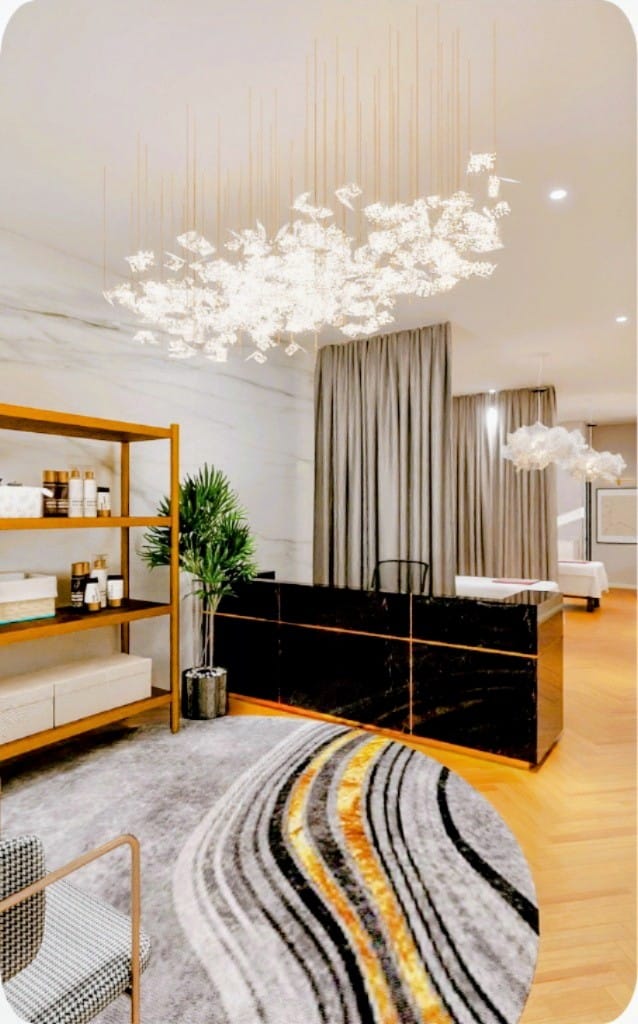
Your interior is part of your brand
Whether it’s a restaurant, café, hotel, retail store, showroom, office or other commercial space, your interior can be much more than a beautiful backdrop.
It can be a physical expression of your brand.
Before a customer speaks to your staff, reads your menu or tries your product, they are already experiencing your business through the environment around them.
The colours, materials, lighting, furniture, layout, signage and overall atmosphere all communicate something.
Is the business sophisticated or relaxed?
Bold or understated?
Playful or serious?
Traditional or contemporary?
Affordable or premium?
These impressions can happen within seconds — often without the customer consciously thinking about them.
That is why I believe commercial interior design should start with the business, not simply with how the designer wants the space to look.
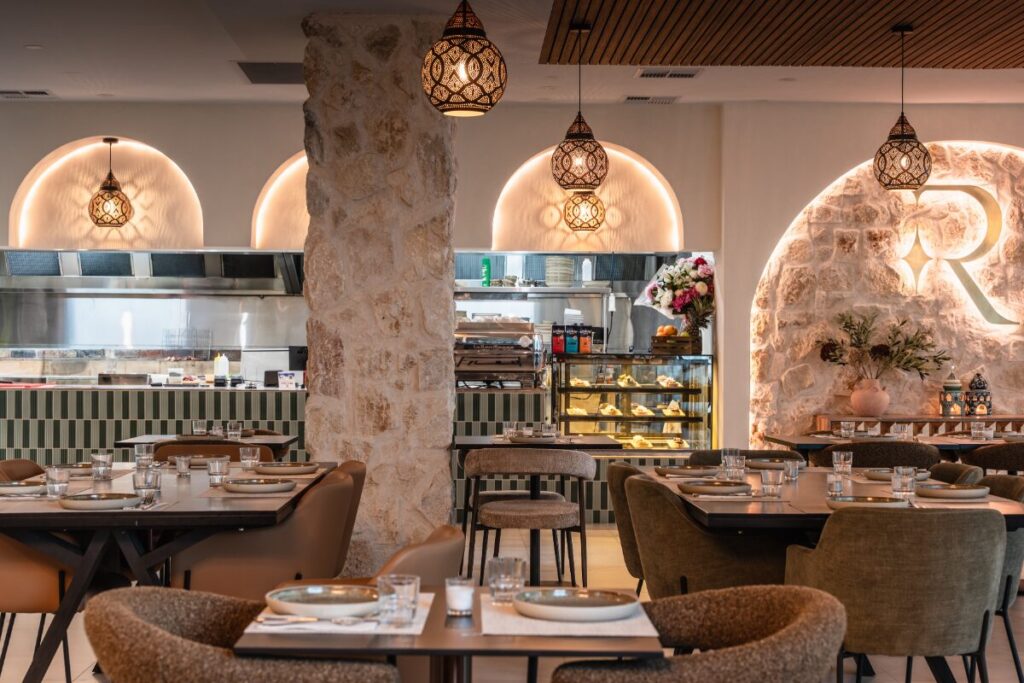
Design should support the customer experience
When I work on a commercial interior, I look at the brand identity, colours, personality and target customers, and then consider how those elements can be translated into the physical environment.
But there is another important question:
What do you want your customers to feel?
A successful commercial space should create an experience that feels appropriate to the business.
For a restaurant, perhaps you want customers to feel transported somewhere else for a few hours.
For a boutique hotel, you might want them to feel relaxed, indulged and away from everyday life.
For a retail store, you may want the environment to encourage people to explore, stay longer and discover more products.
For an office, the priorities might be completely different — creating an environment that supports productivity, collaboration and employee wellbeing while still reflecting the company’s identity.
Good design connects all of these elements.
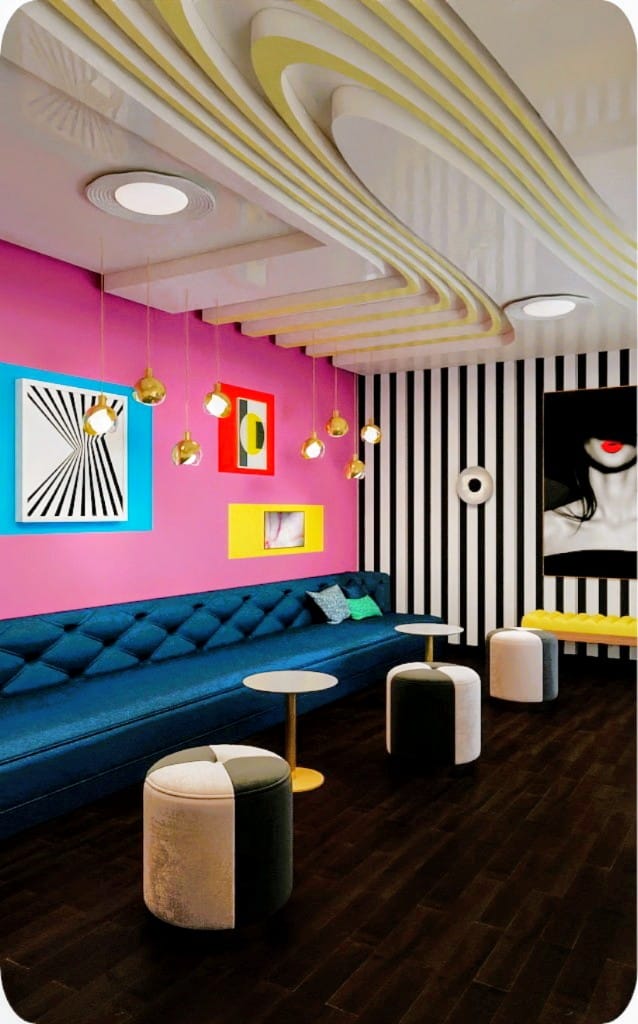
Restaurant design is a great example
Restaurants are perhaps one of the clearest examples of how the physical environment can contribute to business success.
The design of a restaurant has to balance several different needs at the same time.
First, there is the guest.
They need to feel welcomed and comfortable, but ideally the space should also create a sense of atmosphere and anticipation. The design can influence how long they stay, how they experience their meal and how memorable the overall visit becomes.
Then there is the staff.
A restaurant may look beautiful, but if the kitchen, bar, service areas and dining room don’t work together efficiently, the design is not doing its job.
Staff need to be able to move smoothly through the space, serve customers efficiently and perform their tasks without unnecessary obstacles.
And then there is the owner.
Every square metre has a cost.
There needs to be a sensible balance between the area used for customers and the space required for the kitchen, storage, preparation, staff facilities and other operational needs.
A beautiful restaurant that doesn’t function efficiently is not necessarily a successful restaurant.
The challenge is to bring all three perspectives together:
the guest, the staff and the business owner.
That is where commercial interior design becomes much more than decoration.
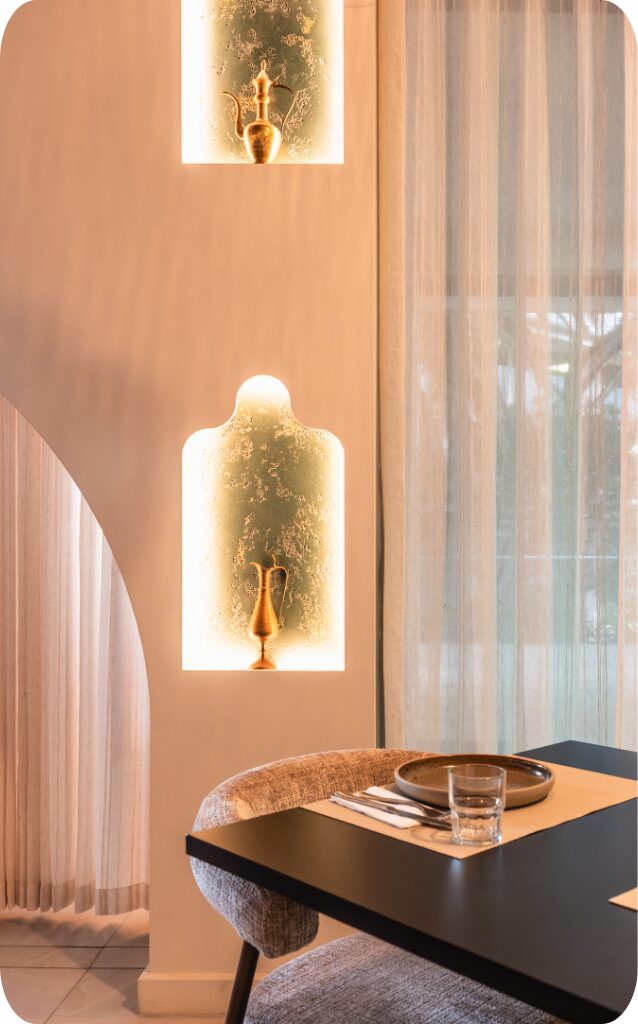
Beauty needs to have a purpose
I love creating beautiful spaces, but commercial design isn’t simply about making a business look good.
The design needs to have a reason behind it.
A restaurant may need more seats rather than a larger decorative feature.
A retail store may need better circulation so customers naturally move through the space.
A hotel lobby may need to create an immediate sense of arrival.
An office may need flexible areas that allow people to work in different ways.
And sometimes, the most visually striking element is there because it supports the brand — creating a memorable moment that customers photograph, talk about or associate with the business.
This is where design and business strategy intersect.
Being different matters
In a competitive market, customers have many choices.
Two restaurants may serve similar food.
Two cafés may sell similar coffee.
Two retailers may sell similar products.
Two hotels may offer similar rooms.
So what makes someone choose one over another?
Of course, the product and service matter enormously.
But the experience surrounding them matters too.
A distinctive interior can become part of that experience — something customers recognise, remember and associate with your business.
And this brings me back to the idea from Entrepreneur’s Handbook:
Competitive advantage is found in the differences.
Your difference doesn’t necessarily have to be a completely new product or a lower price.
Sometimes, it can be the way your business makes people feel.
Your space can tell your story
For me, this is one of the most interesting parts of commercial interior design.
A business already has a story — its personality, values, customers, products and ambitions.
The interior gives that story a physical form.
It can turn a brand from something customers see on a website or social media into something they can actually experience.
And when the design is done well, the space doesn’t feel like branding has simply been added to it.
The branding, design and customer experience feel like they belong together.
That is when an interior can become a genuine competitive advantage.
Because your commercial space isn’t just where your business operates.
It can be part of what makes your business uniquely yours.